
An unusual upbringing, reconstituted into a very usual memoir.
Autobiography of adolescent trauma depicting the author’s quest for survival in an unorthodox family alongside his quest for fabulous hair.
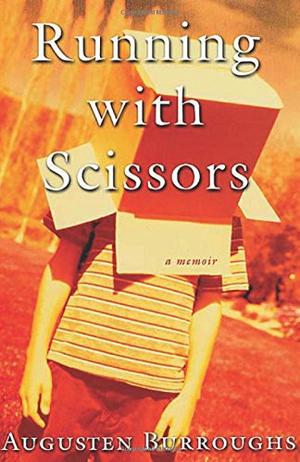
Copywriter turned novelist Burroughs (Sellevision, 2000) captures in his memoir a particular cultural moment in the late 1970s and early ’80s when the baby boomers’ flaccid if-it-feels-good-do-it ethos soured. “My parents loathed each other and the life they had built together,” he writes. The estrangement of his increasingly manic-depressive poet mother and cold, alcoholic father flung young Burroughs into the strange Northampton, Massachusetts, household of family psychiatrist Dr. Finch, a jolly and permissive yet ominous figure who advocated intense therapy and nonjudgmental fathering. At his mother’s insistence, Burroughs spent much of his adolescence living among the Finches. The fussy, hairdressing-obsessed boy was unnerved by their squalid household but became close with irascible daughters Hope and Natalie, participating in their substance abuse and delinquency, helping them wreck the Finches’ dilapidated Victorian house. The doctor’s pseudo-parenting encouraged the boy’s sexual relationship with creepy, manipulative, much older Neil Bookman, Finch’s “adopted son.” When the doctor coached Burroughs to stage a suicide attempt in order to get out of going to school, our hero began to wonder whether life with the Finches would equip him, or Hope, or Natalie with mainstream survival skills—eventually, surprisingly enough, it did. Burroughs strongly delineates the tangled, perverse bonds among these high-watt eccentrics and his childhood self, aspiring to a grotesque comic merger of John Waters and David Sedaris. However, his under-edited prose is frequently uninspired and rambling, relying on consumer-culture references (from Clairol, Pat Benatar, Brooke Shields, Captain and Tennille, Sea Monkeys, the Brady Bunch, to Magic Eight Balls, etc., etc.) and repetitive sequences of abrasive dialogue (“Stop antagonizing me. . . . Just stop transferring all this anger onto me”). Presumably he garnered these details from his oft-mentioned journal, but they fail to deepen the characters.
An unusual upbringing, reconstituted into a very usual memoir.Pub Date: July 1, 2002
ISBN: 0-312-28370-9
Page Count: 288
Publisher: St. Martin's
Review Posted Online: May 19, 2010
Kirkus Reviews Issue: May 15, 2002

The author's youthfulness helps to assure the inevitable comparison with the Anne Frank diary although over and above the...
Elie Wiesel spent his early years in a small Transylvanian town as one of four children.
He was the only one of the family to survive what Francois Maurois, in his introduction, calls the "human holocaust" of the persecution of the Jews, which began with the restrictions, the singularization of the yellow star, the enclosure within the ghetto, and went on to the mass deportations to the ovens of Auschwitz and Buchenwald. There are unforgettable and horrifying scenes here in this spare and sombre memoir of this experience of the hanging of a child, of his first farewell with his father who leaves him an inheritance of a knife and a spoon, and of his last goodbye at Buchenwald his father's corpse is already cold let alone the long months of survival under unconscionable conditions.
Pub Date: Jan. 16, 2006
ISBN: 0374500010
Page Count: 120
Publisher: Hill & Wang
Review Posted Online: Oct. 7, 2011
Kirkus Reviews Issue: Jan. 15, 2006

Well-told and admonitory.
Young-rags-to-mature-riches memoir by broker and motivational speaker Gardner.
Born and raised in the Milwaukee ghetto, the author pulled himself up from considerable disadvantage. He was fatherless, and his adored mother wasn’t always around; once, as a child, he spied her at a family funeral accompanied by a prison guard. When beautiful, evanescent Moms was there, Chris also had to deal with Freddie “I ain’t your goddamn daddy!” Triplett, one of the meanest stepfathers in recent literature. Chris did “the dozens” with the homies, boosted a bit and in the course of youthful adventure was raped. His heroes were Miles Davis, James Brown and Muhammad Ali. Meanwhile, at the behest of Moms, he developed a fondness for reading. He joined the Navy and became a medic (preparing badass Marines for proctology), and a proficient lab technician. Moving up in San Francisco, married and then divorced, he sold medical supplies. He was recruited as a trainee at Dean Witter just around the time he became a homeless single father. All his belongings in a shopping cart, Gardner sometimes slept with his young son at the office (apparently undiscovered by the night cleaning crew). The two also frequently bedded down in a public restroom. After Gardner’s talents were finally appreciated by the firm of Bear Stearns, his American Dream became real. He got the cool duds, hot car and fine ladies so coveted from afar back in the day. He even had a meeting with Nelson Mandela. Through it all, he remained a prideful parent. His own no-daddy blues are gone now.
Well-told and admonitory.Pub Date: June 1, 2006
ISBN: 0-06-074486-3
Page Count: 320
Publisher: Amistad/HarperCollins
Review Posted Online: May 19, 2010
Kirkus Reviews Issue: March 15, 2006
© Copyright 2024 Kirkus Media LLC. All Rights Reserved.
Follow
Popular in this Genre

We can’t wait for you to join Kirkus!
It’s free and takes less than 10 seconds!
Already have an account? Log in.
OR
 Sign in with Google
Trouble signing in? Retrieve credentials.
Welcome Back!
OR
Sign in with GoogleTrouble signing in? Retrieve credentials.



 bookshelf