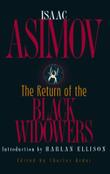
Compared with the works of the founders of modern sf, H.G. Wells and Jules Verne, those of the 1930's, contrary to the overblown title, often seem insufferably crude; even the better craftsmen of the era were prone to excessive verbiage, prose that was more puce than purple, cartoon characters and antics, and rickety or nonexistent plots—all of which are on ample display here. Sf, however, is primarily a literature of ideas—so, readers may observe herein the fascinating, sometimes traumatic birth of ideas that became classic, and, with various modifications, persisted into the present. Thus, H.P. Lovecraft describes some mind-swapping horrors from the distant past. Editor/writer Horace L. Gold (Galaxy) posits the dilemma of a man whose brain is transplanted into a dog's body. A woman is revived from the dead in Cornell Woolrich's melodrama. Editor/writer John W. Campbell (Astounding) discovers some aliens frozen in the ice of Antarctica. Another editor/writer, Harry Bates (Amazing), speculates on far-future humans so intellectualized that they have devolved into idiots. Murray Leinster invents the notion of travelling into probability-worlds. Eric Frank Russell and Leslie T. Johnson time-travel into the gar future. L. Sprague de Camp, in the best story here, defeats some alien conquerors by knocking off their thinking-caps. Stanley G. Weinbaum's immortal female conqueror harasses the distant future. And Jack Williamson's sinister nasties invade Earth from another dimension. Ideas sound familiar? They should. Worth a try for nostalgia buffs and students of the field.
Pub Date: July 15, 1988
ISBN: 0881844101
Page Count: -
Publisher: Carroll & Graf
Review Posted Online: Sept. 16, 2011
Kirkus Reviews Issue: June 15, 1988

A tasty, if not always tasteful, tale of supernatural mayhem that fans of King and Crichton alike will enjoy.
Are we not men? We are—well, ask Bigfoot, as Brooks does in this delightful yarn, following on his bestseller World War Z(2006).
A zombie apocalypse is one thing. A volcanic eruption is quite another, for, as the journalist who does a framing voice-over narration for Brooks’ latest puts it, when Mount Rainier popped its cork, “it was the psychological aspect, the hyperbole-fueled hysteria that had ended up killing the most people.” Maybe, but the sasquatches whom the volcano displaced contributed to the statistics, too, if only out of self-defense. Brooks places the epicenter of the Bigfoot war in a high-tech hideaway populated by the kind of people you might find in a Jurassic Park franchise: the schmo who doesn’t know how to do much of anything but tries anyway, the well-intentioned bleeding heart, the know-it-all intellectual who turns out to know the wrong things, the immigrant with a tough backstory and an instinct for survival. Indeed, the novel does double duty as a survival manual, packed full of good advice—for instance, try not to get wounded, for “injury turns you from a giver to a taker. Taking up our resources, our time to care for you.” Brooks presents a case for making room for Bigfoot in the world while peppering his narrative with timely social criticism about bad behavior on the human side of the conflict: The explosion of Rainier might have been better forecast had the president not slashed the budget of the U.S. Geological Survey, leading to “immediate suspension of the National Volcano Early Warning System,” and there’s always someone around looking to monetize the natural disaster and the sasquatch-y onslaught that follows. Brooks is a pro at building suspense even if it plays out in some rather spectacularly yucky episodes, one involving a short spear that takes its name from “the sucking sound of pulling it out of the dead man’s heart and lungs.” Grossness aside, it puts you right there on the scene.
A tasty, if not always tasteful, tale of supernatural mayhem that fans of King and Crichton alike will enjoy.Pub Date: June 16, 2020
ISBN: 978-1-9848-2678-7
Page Count: 304
Publisher: Del Rey/Ballantine
Review Posted Online: Feb. 9, 2020
Kirkus Reviews Issue: March 1, 2020

BOOK REVIEW

BOOK TO SCREEN

A celebration of fantasy that melds modern ideology with classic tropes. More of these dragons, please.
After 1,000 years of peace, whispers that “the Nameless One will return” ignite the spark that sets the world order aflame.
No, the Nameless One is not a new nickname for Voldemort. Here, evil takes the shape of fire-breathing dragons—beasts that feed off chaos and imbalance—set on destroying humankind. The leader of these creatures, the Nameless One, has been trapped in the Abyss for ages after having been severely wounded by the sword Ascalon wielded by Galian Berethnet. These events brought about the current order: Virtudom, the kingdom set up by Berethnet, is a pious society that considers all dragons evil. In the East, dragons are worshiped as gods—but not the fire-breathing type. These dragons channel the power of water and are said to be born of stars. They forge a connection with humans by taking riders. In the South, an entirely different way of thinking exists. There, a society of female mages called the Priory worships the Mother. They don’t believe that the Berethnet line, continued by generations of queens, is the sacred key to keeping the Nameless One at bay. This means he could return—and soon. “Do you not see? It is a cycle.” The one thing uniting all corners of the world is fear. Representatives of each belief system—Queen Sabran the Ninth of Virtudom, hopeful dragon rider Tané of the East, and Ead Duryan, mage of the Priory from the South—are linked by the common goal of keeping the Nameless One trapped at any cost. This world of female warriors and leaders feels natural, and while there is a “chosen one” aspect to the tale, it’s far from the main point. Shannon’s depth of imagination and worldbuilding are impressive, as this 800-pager is filled not only with legend, but also with satisfying twists that turn legend on its head. Shannon isn’t new to this game of complex storytelling. Her Bone Season novels (The Song Rising, 2017, etc.) navigate a multilayered society of clairvoyants. Here, Shannon chooses a more traditional view of magic, where light fights against dark, earth against sky, and fire against water. Through these classic pairings, an entirely fresh and addicting tale is born. Shannon may favor detailed explication over keeping a steady pace, but the epic converging of plotlines at the end is enough to forgive.
A celebration of fantasy that melds modern ideology with classic tropes. More of these dragons, please.Pub Date: Feb. 26, 2019
ISBN: 978-1-63557-029-8
Page Count: 848
Publisher: Bloomsbury
Review Posted Online: Dec. 22, 2018
Kirkus Reviews Issue: Jan. 15, 2019
© Copyright 2024 Kirkus Media LLC. All Rights Reserved.
Follow
Popular in this Genre

We can’t wait for you to join Kirkus!
It’s free and takes less than 10 seconds!
Already have an account? Log in.
OR
 Sign in with Google
Trouble signing in? Retrieve credentials.
Welcome Back!
OR
Sign in with GoogleTrouble signing in? Retrieve credentials.




 bookshelf