Nostalgia reigns in this account of how the film industry responded to WW II. Hoopes (Ralph Ingersoll, 1985, etc.), Washington bureau chief of Modern Maturity, has written extensively on the ``good old days,'' and his latest effort is in the same vein of mildly revisionist memorabilia. Even before the start of the war, some members of of Hollywood's acting community—notably the British and progressive-minded Jews—were already alert to the dangers posed by the Nazis, and it is with these farsighted individuals that Hoopes begins his chronicle. Vienna-born actor Helmut Dantine, for example, spent three months in a concentration camp as a result of his anti-Nazi activism before coming to America. After Pearl Harbor, however, the entire filmmaking community pitched in eagerly with bond drives, USO tours, and enlistments. ``In many ways, World War II was Hollywood's finest hour,'' Hoopes asserts. ``Just about every male star not in the service went on at least one USO tour; among actresses, participation was close to 100 percent.'' (A notable exception was Greta Garbo.) Although the reaction of the industry to the war is a potentially fascinating story, and Hoopes has some splendid anecdotes, this book suffers from a warmed-over feeling. The first and biggest problem is Hoopes's working method: By his own admission, the entire book was gleaned from secondary sources, most of them movie-star autobiographies—not notably reliable sources of information. As a result, where two reports of events conflict, Hoopes merely repeats both versions and leaves it to readers to decide who is telling the truth; and where a star is not forthcoming about his war record, Robert Montgomery for instance, Hoopes offers silence. This is just lazy reporting. Finally, although the book is organized in a loose chronology, it has no real structure, and meanders aimlessly, if amiably, from anecdote to anecdote. A disappointing failure to explore a rich topic.
Pub Date: Jan. 9, 1995
ISBN: 0-679-41423-1
Page Count: 416
Publisher: Random House
Review Posted Online: May 19, 2010
Kirkus Reviews Issue: Nov. 1, 1994

BOOK REVIEW

BOOK REVIEW

BOOK REVIEW

Dogged original research and superb narrative skills come together in this gripping account of pitiless evil.
Greed, depravity, and serial murder in 1920s Oklahoma.
During that time, enrolled members of the Osage Indian nation were among the wealthiest people per capita in the world. The rich oil fields beneath their reservation brought millions of dollars into the tribe annually, distributed to tribal members holding "headrights" that could not be bought or sold but only inherited. This vast wealth attracted the attention of unscrupulous whites who found ways to divert it to themselves by marrying Osage women or by having Osage declared legally incompetent so the whites could fleece them through the administration of their estates. For some, however, these deceptive tactics were not enough, and a plague of violent death—by shooting, poison, orchestrated automobile accident, and bombing—began to decimate the Osage in what they came to call the "Reign of Terror." Corrupt and incompetent law enforcement and judicial systems ensured that the perpetrators were never found or punished until the young J. Edgar Hoover saw cracking these cases as a means of burnishing the reputation of the newly professionalized FBI. Bestselling New Yorker staff writer Grann (The Devil and Sherlock Holmes: Tales of Murder, Madness, and Obsession, 2010, etc.) follows Special Agent Tom White and his assistants as they track the killers of one extended Osage family through a closed local culture of greed, bigotry, and lies in pursuit of protection for the survivors and justice for the dead. But he doesn't stop there; relying almost entirely on primary and unpublished sources, the author goes on to expose a web of conspiracy and corruption that extended far wider than even the FBI ever suspected. This page-turner surges forward with the pacing of a true-crime thriller, elevated by Grann's crisp and evocative prose and enhanced by dozens of period photographs.
Dogged original research and superb narrative skills come together in this gripping account of pitiless evil.Pub Date: April 18, 2017
ISBN: 978-0-385-53424-6
Page Count: 352
Publisher: Doubleday
Review Posted Online: Feb. 1, 2017
Kirkus Reviews Issue: Feb. 15, 2017

BOOK TO SCREEN

BOOK TO SCREEN

BOOK TO SCREEN

The author's youthfulness helps to assure the inevitable comparison with the Anne Frank diary although over and above the...
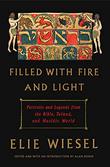
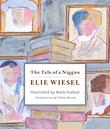
Elie Wiesel spent his early years in a small Transylvanian town as one of four children.
He was the only one of the family to survive what Francois Maurois, in his introduction, calls the "human holocaust" of the persecution of the Jews, which began with the restrictions, the singularization of the yellow star, the enclosure within the ghetto, and went on to the mass deportations to the ovens of Auschwitz and Buchenwald. There are unforgettable and horrifying scenes here in this spare and sombre memoir of this experience of the hanging of a child, of his first farewell with his father who leaves him an inheritance of a knife and a spoon, and of his last goodbye at Buchenwald his father's corpse is already cold let alone the long months of survival under unconscionable conditions.
Pub Date: Jan. 16, 2006
ISBN: 0374500010
Page Count: 120
Publisher: Hill & Wang
Review Posted Online: Oct. 7, 2011
Kirkus Reviews Issue: Jan. 15, 2006
© Copyright 2024 Kirkus Media LLC. All Rights Reserved.
Follow
Popular in this Genre

We can’t wait for you to join Kirkus!
It’s free and takes less than 10 seconds!
Already have an account? Log in.
OR
 Sign in with Google
Trouble signing in? Retrieve credentials.
Welcome Back!
OR
Sign in with GoogleTrouble signing in? Retrieve credentials.



 bookshelf