A powerful if flawed portrayal of the Holocaust’s barbarity and one man’s will to survive.
In a grisly fictional memoir, a Polish Jew recounts his years in the Warsaw ghetto and Nazi concentration camps.
First-time author Cornell’s novel gives an account of one man’s horrific experiences during World War II. As a boy, Henryk Frankowski and his family were hauled off by German authorities, first to the Warsaw ghetto and then to concentration camps, including Auschwitz-Birkenau. Enduring dehumanizing scenes of utter degradation, Henryk grew into a young man during his four years in the camps, as the authorities separated him from his parents and siblings. He and his fellow prisoners suffered monstrous brutality: Guards killed or beat them for the slightest offense or for none at all; they worked as slave laborers under intolerable conditions, subsisting on meager rations of revolting swill. Rats and prisoners fed on corpses of dead inmates; the crematoria couldn’t keep up with the swelling stacks of cadavers. Crafted in the form of Henryk’s memoir as an old man in the U.S., the novel creates powerful images of incredible viciousness and, in reflection, of human strength and courage. The narrative has many weaknesses, however. For instance, the device of Henryk’s mother’s ring, which she gives to him to show the power of love and family, feels contrived. Characterization is weak: Cornell doesn’t give readers a full portrait of Henryk’s mother beyond the love one would expect in any normal mother-child relationship, or of his siblings and father. Though the writing is serviceable and spare, anachronistic words don’t fit the era or the narrator: “hassle,” “win-win,” and “spacey” have too much of a hollow, contemporary American ring. More dialogue would have helped flesh out the novel’s characters, too. Readers know little about Henryk’s family, fellow prisoners or overseers beyond the suffering of the first two and the brutality of the latter. By the time Henryk emerges from the camps at war’s end, weighing only 68 pounds, the book has shown much more about the camps in general than about his compatriots. Still, the sheer inhumanity and cruelty deserve retelling.
A powerful if flawed portrayal of the Holocaust’s barbarity and one man’s will to survive.Pub Date: July 30, 2013
ISBN: 978-1490311487
Page Count: 346
Publisher: CreateSpace
Review Posted Online: Oct. 11, 2013
Review Program: Kirkus Indie

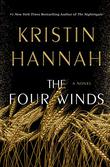
A dramatic, vividly detailed reconstruction of a little-known aspect of the Vietnam War.
A young woman’s experience as a nurse in Vietnam casts a deep shadow over her life.
When we learn that the farewell party in the opening scene is for Frances “Frankie” McGrath’s older brother—“a golden boy, a wild child who could make the hardest heart soften”—who is leaving to serve in Vietnam in 1966, we feel pretty certain that poor Finley McGrath is marked for death. Still, it’s a surprise when the fateful doorbell rings less than 20 pages later. His death inspires his sister to enlist as an Army nurse, and this turn of events is just the beginning of a roller coaster of a plot that’s impressive and engrossing if at times a bit formulaic. Hannah renders the experiences of the young women who served in Vietnam in all-encompassing detail. The first half of the book, set in gore-drenched hospital wards, mildewed dorm rooms, and boozy officers’ clubs, is an exciting read, tracking the transformation of virginal, uptight Frankie into a crack surgical nurse and woman of the world. Her tensely platonic romance with a married surgeon ends when his broken, unbreathing body is airlifted out by helicopter; she throws her pent-up passion into a wild affair with a soldier who happens to be her dead brother’s best friend. In the second part of the book, after the war, Frankie seems to experience every possible bad break. A drawback of the story is that none of the secondary characters in her life are fully three-dimensional: Her dismissive, chauvinistic father and tight-lipped, pill-popping mother, her fellow nurses, and her various love interests are more plot devices than people. You’ll wish you could have gone to Vegas and placed a bet on the ending—while it’s against all the odds, you’ll see it coming from a mile away.
A dramatic, vividly detailed reconstruction of a little-known aspect of the Vietnam War.Pub Date: Feb. 6, 2024
ISBN: 9781250178633
Page Count: 480
Publisher: St. Martin's
Review Posted Online: Nov. 4, 2023
Kirkus Reviews Issue: Dec. 1, 2023

PERSPECTIVES

BOOK TO SCREEN

Lush, gorgeous, precise language and propulsive plotting sweep readers into a story as intelligent as it is atmospheric.
In 16th-century Madrid, a crypto-Jew with a talent for casting spells tries to steer clear of the Inquisition.
Luzia Cotado, a scullion and an orphan, has secrets to keep: “It was a game she and her mother had played, saying one thing and thinking another, the bits and pieces of Hebrew handed down like chipped plates.” Also handed down are “refranes”—proverbs—in “not quite Spanish, just as Luzia was not quite Spanish.” When Luzia sings the refranes, they take on power. “Aboltar cazal, aboltar mazal” (“A change of scene, a change of fortune”) can mend a torn gown or turn burnt bread into a perfect loaf; “Quien no risica, no rosica” (“Whoever doesn’t laugh, doesn’t bloom”) can summon a riot of foliage in the depths of winter. The Inquisition hangs over the story like Chekhov’s famous gun on the wall. When Luzia’s employer catches her using magic, the ambitions of both mistress and servant catapult her into fame and danger. A new, even more ambitious patron instructs his supernatural servant, Guillén Santángel, to train Luzia for a magical contest. Santángel, not Luzia, is the familiar of the title; he has been tricked into trading his freedom and luck to his master’s family in exchange for something he no longer craves but can’t give up. The novel comes up against an issue common in fantasy fiction: Why don’t the characters just use their magic to solve all their problems? Bardugo has clearly given it some thought, but her solutions aren’t quite convincing, especially toward the end of the book. These small faults would be harder to forgive if she weren’t such a beautiful writer. Part fairy tale, part political thriller, part romance, the novel unfolds like a winter tree bursting into unnatural bloom in response to one of Luzia’s refranes, as she and Santángel learn about power, trust, betrayal, and love.
Lush, gorgeous, precise language and propulsive plotting sweep readers into a story as intelligent as it is atmospheric.Pub Date: April 9, 2024
ISBN: 9781250884251
Page Count: 400
Publisher: Flatiron Books
Review Posted Online: Feb. 3, 2024
Kirkus Reviews Issue: March 1, 2024
© Copyright 2024 Kirkus Media LLC. All Rights Reserved.
Follow
Popular in this Genre

We can’t wait for you to join Kirkus!
It’s free and takes less than 10 seconds!
Already have an account? Log in.
OR
 Sign in with Google
Trouble signing in? Retrieve credentials.
Welcome Back!
OR
Sign in with GoogleTrouble signing in? Retrieve credentials.



 bookshelf