


Well-chosen, enduringly relevant selections.
Penetrating essays across three centuries consider freedom, power, and justice.
Bromwich, a Guggenheim fellow and professor of English at Yale, collects essays, from the early-18th to mid-20th centuries, addressing critical political issues not only of each writer’s time, but of our own. The essays, writes the editor, “show the changing face of oppression and violence, and the invention of new paths for improving justice. Arbitrary power is the enemy throughout.” Several selections are likely to be familiar: Jonathan Swift’s “A Modest Proposal,” Henry David Thoreau’s “Civil Disobedience,” Martin Luther King Jr.’s “Letter From Birmingham City Jail,” and Gandhi’s “The Doctrine of the Sword.” Abraham Lincoln, though, is represented not by his Gettysburg Address but by a letter defending the Emancipation Proclamation; Ralph Waldo Emerson, by a moving protest against the Fugitive Slave Law; and George Eliot, by an argument against anti-Semitism. William James, a member of the Anti-Imperialist League, protests America’s aggression in the Philippines. Repeatedly, writers urge the need for independent thought against unexamined beliefs: As Victorian journalist Walter Bagehot wrote, many “wish others to think as they do, not only because they wish to diffuse doctrinal truth, but also and much more because they cannot bear to hear the words of a creed different from their own.” Likewise, W.E.B. Du Bois reminds us, “we have attempted to enthrone any chance majority and make it rule by divine right. We have kicked and cursed minorities as up-starts and usurpers when their sole offense lay in not having ideas or hair like ours.” In “Useful Work Versus Useless Toil,” William Morris cautions, “it has become an article of the creed of modern morality that all labour is good in itself—a convenient belief to those who live on the labour of others.” Overall, the sophistication of language and argument throughout this anthology testifies to what public discourse used to sound like before it became dominated by Twitter rants.
Well-chosen, enduringly relevant selections.Pub Date: Sept. 1, 2020
ISBN: 978-1-68137-462-8
Page Count: 496
Publisher: New York Review Books
Review Posted Online: June 9, 2020
Kirkus Reviews Issue: July 1, 2020

A fierce, penetrating, and empowering call for change.
Artist and activist Vaid-Menon demonstrates how the normativity of the gender binary represses creativity and inflicts physical and emotional violence.
The author, whose parents emigrated from India, writes about how enforcement of the gender binary begins before birth and affects people in all stages of life, with people of color being especially vulnerable due to Western conceptions of gender as binary. Gender assignments create a narrative for how a person should behave, what they are allowed to like or wear, and how they express themself. Punishment of nonconformity leads to an inseparable link between gender and shame. Vaid-Menon challenges familiar arguments against gender nonconformity, breaking them down into four categories—dismissal, inconvenience, biology, and the slippery slope (fear of the consequences of acceptance). Headers in bold font create an accessible navigation experience from one analysis to the next. The prose maintains a conversational tone that feels as intimate and vulnerable as talking with a best friend. At the same time, the author's turns of phrase in moments of deep insight ring with precision and poetry. In one reflection, they write, “the most lethal part of the human body is not the fist; it is the eye. What people see and how people see it has everything to do with power.” While this short essay speaks honestly of pain and injustice, it concludes with encouragement and an invitation into a future that celebrates transformation.
A fierce, penetrating, and empowering call for change. (writing prompt) (Nonfiction. 14-adult)Pub Date: June 2, 2020
ISBN: 978-0-593-09465-5
Page Count: 64
Publisher: Penguin Workshop
Review Posted Online: March 14, 2020
Kirkus Reviews Issue: April 1, 2020

A clearly delineated guide to finally eradicate poverty in America.
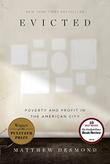
A thoughtful program for eradicating poverty from the Pulitzer Prize–winning author of Evicted.
“America’s poverty is not for lack of resources,” writes Desmond. “We lack something else.” That something else is compassion, in part, but it’s also the lack of a social system that insists that everyone pull their weight—and that includes the corporations and wealthy individuals who, the IRS estimates, get away without paying upward of $1 trillion per year. Desmond, who grew up in modest circumstances and suffered poverty in young adulthood, points to the deleterious effects of being poor—among countless others, the precarity of health care and housing (with no meaningful controls on rent), lack of transportation, the constant threat of losing one’s job due to illness, and the need to care for dependent children. It does not help, Desmond adds, that so few working people are represented by unions or that Black Americans, even those who have followed the “three rules” (graduate from high school, get a full-time job, wait until marriage to have children), are far likelier to be poor than their White compatriots. Furthermore, so many full-time jobs are being recast as contracted, fire-at-will gigs, “not a break from the norm as much as an extension of it, a continuation of corporations finding new ways to limit their obligations to workers.” By Desmond’s reckoning, besides amending these conditions, it would not take a miracle to eliminate poverty: about $177 billion, which would help end hunger and homelessness and “make immense headway in driving down the many agonizing correlates of poverty, like violence, sickness, and despair.” These are matters requiring systemic reform, which will in turn require Americans to elect officials who will enact that reform. And all of us, the author urges, must become “poverty abolitionists…refusing to live as unwitting enemies of the poor.” Fortune 500 CEOs won’t like Desmond’s message for rewriting the social contract—which is precisely the point.
A clearly delineated guide to finally eradicate poverty in America.Pub Date: March 21, 2023
ISBN: 9780593239919
Page Count: 288
Publisher: Crown
Review Posted Online: Nov. 30, 2022
Kirkus Reviews Issue: Jan. 1, 2023
BOOK REVIEW

PERSPECTIVES

PERSPECTIVES

SEEN & HEARD
© Copyright 2024 Kirkus Media LLC. All Rights Reserved.
Follow
Popular in this Genre

We can’t wait for you to join Kirkus!
It’s free and takes less than 10 seconds!
Already have an account? Log in.
OR
 Sign in with Google
Trouble signing in? Retrieve credentials.
Welcome Back!
OR
Sign in with GoogleTrouble signing in? Retrieve credentials.


 bookshelf


