Cultural, sometimes labyrinthine, anthology-survey of the ever-changing entity of incorporated counties called Greater Los Angeles. This is a fascinating but mixed bag whose variety works against sustained interest. Readers caught by one aspect of L.A.— as told by Eve Babitz, Alexander Cockburn, Mike Davis, Lynell George, Thomas S. Hines, Jeremy Larner, Ruben Martinez, David Reid, Carolyn See, or David Thomson—will not necessarily be absorbed with the other writers' comments. Right at the start, many readers will flounder in the wave of unfamiliar names, streets, districts, and buildings that washes in with Cockburn's overview of the Pacific Rim and his subsequent neighborhood-by-neighborhood trek that ends in a tour of ``the cruel frenzies of Downtown.'' Davis picks up on the loss of electoral power among minorities through gerrymandering and the ``new Industrial peonage.'' See has lively personal memories of her varied minority husbands who were interested in ``melting'' into the racial landscape by tying in with her, while Babitz writes well of the effects of yoga on her love life. George's ``City of Specters'' reviews her ties with death among blacks that gather into a depressive sense of doom she calls ``generational,'' adding that ``the concept of life has never been more ephemeral, the scope of a life-span more abstract.'' Editor Reid takes on exotic religions, focusing on Krishnamurti. Hines surveys L.A.'s outstanding architects (Irving Gill, Frank Lloyd Wright, Frank Gehry), while Thomson gives us a tour of Mulholland Drive/Highway as ``Marilyn Monroe, 50 miles long, lying on her side on a ridge of crumbling rock, the crest of the Santa Monica mountains, with chaparral, wildflowers, and snakes writhing over her body.'' The book's one masterpiece is novelist/screenwriter Jeremy Larner's ``Rack's Rules,'' about the morals of power in ``Movieland.'' Sour and rarely sweet, most vital as memoir and fantasy.
Pub Date: Feb. 1, 1992
ISBN: 0-394-57321-8
Page Count: 352
Publisher: Pantheon
Review Posted Online: May 19, 2010
Kirkus Reviews Issue: Jan. 1, 1992

BOOK REVIEW

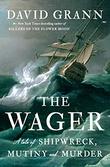
Dogged original research and superb narrative skills come together in this gripping account of pitiless evil.
Greed, depravity, and serial murder in 1920s Oklahoma.
During that time, enrolled members of the Osage Indian nation were among the wealthiest people per capita in the world. The rich oil fields beneath their reservation brought millions of dollars into the tribe annually, distributed to tribal members holding "headrights" that could not be bought or sold but only inherited. This vast wealth attracted the attention of unscrupulous whites who found ways to divert it to themselves by marrying Osage women or by having Osage declared legally incompetent so the whites could fleece them through the administration of their estates. For some, however, these deceptive tactics were not enough, and a plague of violent death—by shooting, poison, orchestrated automobile accident, and bombing—began to decimate the Osage in what they came to call the "Reign of Terror." Corrupt and incompetent law enforcement and judicial systems ensured that the perpetrators were never found or punished until the young J. Edgar Hoover saw cracking these cases as a means of burnishing the reputation of the newly professionalized FBI. Bestselling New Yorker staff writer Grann (The Devil and Sherlock Holmes: Tales of Murder, Madness, and Obsession, 2010, etc.) follows Special Agent Tom White and his assistants as they track the killers of one extended Osage family through a closed local culture of greed, bigotry, and lies in pursuit of protection for the survivors and justice for the dead. But he doesn't stop there; relying almost entirely on primary and unpublished sources, the author goes on to expose a web of conspiracy and corruption that extended far wider than even the FBI ever suspected. This page-turner surges forward with the pacing of a true-crime thriller, elevated by Grann's crisp and evocative prose and enhanced by dozens of period photographs.
Dogged original research and superb narrative skills come together in this gripping account of pitiless evil.Pub Date: April 18, 2017
ISBN: 978-0-385-53424-6
Page Count: 352
Publisher: Doubleday
Review Posted Online: Feb. 1, 2017
Kirkus Reviews Issue: Feb. 15, 2017

BOOK TO SCREEN

BOOK TO SCREEN

BOOK TO SCREEN

This moving, potent testament might have been titled “Black Lives Matter.” Or: “An American Tragedy.”
The powerful story of a father’s past and a son’s future.
Atlantic senior writer Coates (The Beautiful Struggle: A Father, Two Sons, and an Unlikely Road to Manhood, 2008) offers this eloquent memoir as a letter to his teenage son, bearing witness to his own experiences and conveying passionate hopes for his son’s life. “I am wounded,” he writes. “I am marked by old codes, which shielded me in one world and then chained me in the next.” Coates grew up in the tough neighborhood of West Baltimore, beaten into obedience by his father. “I was a capable boy, intelligent and well-liked,” he remembers, “but powerfully afraid.” His life changed dramatically at Howard University, where his father taught and from which several siblings graduated. Howard, he writes, “had always been one of the most critical gathering posts for black people.” He calls it The Mecca, and its faculty and his fellow students expanded his horizons, helping him to understand “that the black world was its own thing, more than a photo-negative of the people who believe they are white.” Coates refers repeatedly to whites’ insistence on their exclusive racial identity; he realizes now “that nothing so essentialist as race” divides people, but rather “the actual injury done by people intent on naming us, intent on believing that what they have named matters more than anything we could ever actually do.” After he married, the author’s world widened again in New York, and later in Paris, where he finally felt extricated from white America’s exploitative, consumerist dreams. He came to understand that “race” does not fully explain “the breach between the world and me,” yet race exerts a crucial force, and young blacks like his son are vulnerable and endangered by “majoritarian bandits.” Coates desperately wants his son to be able to live “apart from fear—even apart from me.”
This moving, potent testament might have been titled “Black Lives Matter.” Or: “An American Tragedy.”Pub Date: July 8, 2015
ISBN: 978-0-8129-9354-7
Page Count: 176
Publisher: Spiegel & Grau
Review Posted Online: May 5, 2015
Kirkus Reviews Issue: July 1, 2015

BOOK REVIEW

BOOK REVIEW

SEEN & HEARD

BOOK TO SCREEN

BOOK TO SCREEN
© Copyright 2024 Kirkus Media LLC. All Rights Reserved.
Follow
Popular in this Genre

We can’t wait for you to join Kirkus!
It’s free and takes less than 10 seconds!
Already have an account? Log in.
OR
 Sign in with Google
Trouble signing in? Retrieve credentials.
Welcome Back!
OR
Sign in with GoogleTrouble signing in? Retrieve credentials.



 bookshelf