A measured but engrossing story overloaded with religious discourse.
Helping his daughter track down her missing husband, a California man revisits his complicated past in Pearce’s (Where Fools Dare To Tread, 2019) second installment of his thriller series.
Monk Buttman has strained relationships with multiple family members, including his nearly 30-year-old daughter, Rebekah. So he’s surprised when she calls him, concerned about her husband, Farrell. Monk flies to Virginia with his girlfriend, Agnes, and quickly learns that Farrell is gone. Evidently, he wanted to join a mysterious church. The father-and-daughter team learn that a couple of congregation members who had wanted to leave committed suicide. Rebekah questions their deaths and cryptically mentions someone called “the Angel,” who may have scared Farrell into fleeing. Monk’s search for Farrell leads him, Agnes, and Rebekah west through various states. Along the way, Monk encounters some of his estranged family: his religious mother; his commune-running father; and his ex-wife (and Rebekah’s mom), Astral. The trip ultimately prompts scrutiny—primarily from Rebekah—about Monk’s Christian faith, or lack thereof. As the hunt for Farrell continues, it turns dangerous. Ties to a murder-suicide lead to more homicides and threats against Monk, Agnes, and Rebekah. Pearce proficiently manages abundant characters, whose relationships anchor the story. They often argue at length about religion, which has the unfortunate effect of sidelining the storytelling. These recurrent discussions, however, astutely connect Monk’s past with his current task of finding Farrell. The flawed hero earns some points by admitting his mistakes. His disloyalty to Agnes, however, makes him nearly unlikable. There’s not much on the mystery front, and when Monk stumbles upon several bodies, he remains peculiarly blasé. Nevertheless, the thriller conveys a general sense of dread, as readers know from the opening scene, that one character is doomed.
A measured but engrossing story overloaded with religious discourse.Pub Date: Jan. 9, 2020
ISBN: 978-1-68433-413-1
Page Count: 250
Publisher: Black Rose Writing
Review Posted Online: Jan. 24, 2020
Review Program: Kirkus Indie

BOOK REVIEW

Wacky plot keeps the pages turning and enduring schmaltzy romantic sequences.
Sisters work together to solve a child-abandonment case.
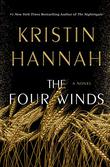
Ellie and Julia Cates have never been close. Julia is shy and brainy; Ellie gets by on charm and looks. Their differences must be tossed aside when a traumatized young girl wanders in from the forest into their hometown in Washington. The sisters’ professional skills are put to the test. Julia is a world-renowned child psychologist who has lost her edge. She is reeling from a case that went publicly sour. Though she was cleared of all wrongdoing, Julia’s name was tarnished, forcing her to shutter her Beverly Hills practice. Ellie Barton is the local police chief in Rain Valley, who’s never faced a tougher case. This is her chance to prove she is more than just a fading homecoming queen, but a scarcity of clues and a reluctant victim make locating the girl’s parents nearly impossible. Ellie places an SOS call to her sister; she needs an expert to rehabilitate this wild-child who has been living outside of civilization for years. Confronted with her professional demons, Julia once again has the opportunity to display her talents and salvage her reputation. Hannah (The Things We Do for Love, 2004, etc.) is at her best when writing from the girl’s perspective. The feral wolf-child keeps the reader interested long after the other, transparent characters have grown tiresome. Hannah’s torturously over-written romance passages are stale, but there are surprises in store as the sisters set about unearthing Alice’s past and creating a home for her.
Wacky plot keeps the pages turning and enduring schmaltzy romantic sequences.Pub Date: March 1, 2006
ISBN: 0-345-46752-3
Page Count: 400
Publisher: Ballantine
Review Posted Online: June 24, 2010
Kirkus Reviews Issue: Dec. 1, 2005

A strict report, worthy of sympathy.
A violent surfacing of adolescence (which has little in common with Tarkington's earlier, broadly comic, Seventeen) has a compulsive impact.
"Nobody big except me" is the dream world of Holden Caulfield and his first person story is down to the basic, drab English of the pre-collegiate. For Holden is now being bounced from fancy prep, and, after a vicious evening with hall- and roommates, heads for New York to try to keep his latest failure from his parents. He tries to have a wild evening (all he does is pay the check), is terrorized by the hotel elevator man and his on-call whore, has a date with a girl he likes—and hates, sees his 10 year old sister, Phoebe. He also visits a sympathetic English teacher after trying on a drunken session, and when he keeps his date with Phoebe, who turns up with her suitcase to join him on his flight, he heads home to a hospital siege. This is tender and true, and impossible, in its picture of the old hells of young boys, the lonesomeness and tentative attempts to be mature and secure, the awful block between youth and being grown-up, the fright and sickness that humans and their behavior cause the challenging, the dramatization of the big bang. It is a sorry little worm's view of the off-beat of adult pressure, of contemporary strictures and conformity, of sentiment….
A strict report, worthy of sympathy.Pub Date: June 15, 1951
ISBN: 0316769177
Page Count: -
Publisher: Little, Brown
Review Posted Online: Nov. 2, 2011
Kirkus Reviews Issue: June 15, 1951

BOOK REVIEW

SEEN & HEARD

SEEN & HEARD

APPRECIATIONS
© Copyright 2024 Kirkus Media LLC. All Rights Reserved.
Follow
Popular in this Genre

We can’t wait for you to join Kirkus!
It’s free and takes less than 10 seconds!
Already have an account? Log in.
OR
 Sign in with Google
Trouble signing in? Retrieve credentials.
Welcome Back!
OR
Sign in with GoogleTrouble signing in? Retrieve credentials.



 bookshelf