


There’s a lovely payoff after the miles of twists and turns. It’s work getting there but work of a thoroughly pleasant kind.
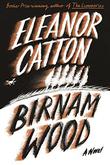
A layered, mannered, beguiling yarn, longlisted for the Booker Prize, by New Zealander novelist Catton.
When Walter Moody arrives on a “wild shard of the Coast”—that of the then-remote South Island—in late January 1866, he discovers that strange doings are afoot: A local worthy has disappeared, a local belle de nuit has tried to do herself in, the town drunk turns out to possess a fortune against all odds, and the whole town is mumbling, murmuring and whispering like Sweethaven in Robert Altman’s Popeye. Indeed, when Moody walks into his hotel on that—yes, dark and stormy—night, he interrupts a gathering of 12 local men who are trying to get to the bottom of the matter. Moody, as it turns out, is trained as a lawyer—“By training only,” he demurs, “I have not yet been called to the Bar”—but, like everyone else, has been lured to the wild by the promise of gold. It is gold in all its glory that fuels this tale, though other goods figure, too, some smuggled in by the very phantom bark that has deposited Moody on the island. Catton’s long opening, in which the narrative point of view ping-pongs among these 13 players and more, sets the stage for a chronologically challenging tale in which mystery piles atop mystery. Catton writes assuredly and with just the right level of flourish: “He was thinking of Sook Yongsheng, lying cold on the floor inside—his chin and throat smeared with boot-black, his eyebrows thickened, like a clown.” She blends elements of Victorian adventure tale, ghost story, detective procedural à la The Moonstone and shaggy dog tale to produce a postmodern tale to do Thomas Pynchon or Julio Cortázar proud; there are even echoes of Calvino in the author’s interesting use of both astronomy and astrology. The possibilities for meta cleverness and archness are endless, and the whole business is too smart by half, but Catton seems mostly amused by her concoction, and that’s just right. About the only fault of the book is its unending length: There’s not an ounce of flab in it, but it’s still too much for ordinary mortals to take in.
There’s a lovely payoff after the miles of twists and turns. It’s work getting there but work of a thoroughly pleasant kind.Pub Date: Oct. 15, 2013
ISBN: 978-0-316-07431-5
Page Count: 848
Publisher: Little, Brown
Review Posted Online: Sept. 17, 2013
Kirkus Reviews Issue: Oct. 1, 2013
BOOK REVIEW

BOOK TO SCREEN
Emma Trailer Promises Snappy Austen Adaptation

BOOK TO SCREEN

Characters flip between bottomless self-regard and pitiless self-loathing while, as late as the second-to-last chapter, yet...
Four Chicago sisters anchor a sharp, sly family story of feminine guile and guilt.
Newcomer Lombardo brews all seven deadly sins into a fun and brimming tale of an unapologetically bougie couple and their unruly daughters. In the opening scene, Liza Sorenson, daughter No. 3, flirts with a groomsman at her sister’s wedding. “There’s four of you?” he asked. “What’s that like?” Her retort: “It’s a vast hormonal hellscape. A marathon of instability and hair products.” Thus begins a story bristling with a particular kind of female intel. When Wendy, the oldest, sets her sights on a mate, she “made sure she left her mark throughout his house—soy milk in the fridge, box of tampons under the sink, surreptitious spritzes of her Bulgari musk on the sheets.” Turbulent Wendy is the novel’s best character, exuding a delectable bratty-ness. The parents—Marilyn, all pluck and busy optimism, and David, a genial family doctor—strike their offspring as impossibly happy. Lombardo levels this vision by interspersing chapters of the Sorenson parents’ early lean times with chapters about their daughters’ wobbly forays into adulthood. The central story unfurls over a single event-choked year, begun by Wendy, who unlatches a closed adoption and springs on her family the boy her stuffy married sister, Violet, gave away 15 years earlier. (The sisters improbably kept David and Marilyn clueless with a phony study-abroad scheme.) Into this churn, Lombardo adds cancer, infidelity, a heart attack, another unplanned pregnancy, a stillbirth, and an office crush for David. Meanwhile, youngest daughter Grace perpetrates a whopper, and “every day the lie was growing like mold, furring her judgment.” The writing here is silky, if occasionally overwrought. Still, the deft touches—a neighborhood fundraiser for a Little Free Library, a Twilight character as erotic touchstone—delight. The class calibrations are divine even as the utter apolitical whiteness of the Sorenson world becomes hard to fathom.
Characters flip between bottomless self-regard and pitiless self-loathing while, as late as the second-to-last chapter, yet another pleasurable tendril of sisterly malice uncurls.Pub Date: June 25, 2019
ISBN: 978-0-385-54425-2
Page Count: 544
Publisher: Doubleday
Review Posted Online: March 3, 2019
Kirkus Reviews Issue: March 15, 2019

SEEN & HEARD

Absolutely enthralling. Read it.
A young Irish couple gets together, splits up, gets together, splits up—sorry, can't tell you how it ends!
Irish writer Rooney has made a trans-Atlantic splash since publishing her first novel, Conversations With Friends, in 2017. Her second has already won the Costa Novel Award, among other honors, since it was published in Ireland and Britain last year. In outline it's a simple story, but Rooney tells it with bravura intelligence, wit, and delicacy. Connell Waldron and Marianne Sheridan are classmates in the small Irish town of Carricklea, where his mother works for her family as a cleaner. It's 2011, after the financial crisis, which hovers around the edges of the book like a ghost. Connell is popular in school, good at soccer, and nice; Marianne is strange and friendless. They're the smartest kids in their class, and they forge an intimacy when Connell picks his mother up from Marianne's house. Soon they're having sex, but Connell doesn't want anyone to know and Marianne doesn't mind; either she really doesn't care, or it's all she thinks she deserves. Or both. Though one time when she's forced into a social situation with some of their classmates, she briefly fantasizes about what would happen if she revealed their connection: "How much terrifying and bewildering status would accrue to her in this one moment, how destabilising it would be, how destructive." When they both move to Dublin for Trinity College, their positions are swapped: Marianne now seems electric and in-demand while Connell feels adrift in this unfamiliar environment. Rooney's genius lies in her ability to track her characters' subtle shifts in power, both within themselves and in relation to each other, and the ways they do and don't know each other; they both feel most like themselves when they're together, but they still have disastrous failures of communication. "Sorry about last night," Marianne says to Connell in February 2012. Then Rooney elaborates: "She tries to pronounce this in a way that communicates several things: apology, painful embarrassment, some additional pained embarrassment that serves to ironise and dilute the painful kind, a sense that she knows she will be forgiven or is already, a desire not to 'make a big deal.' " Then: "Forget about it, he says." Rooney precisely articulates everything that's going on below the surface; there's humor and insight here as well as the pleasure of getting to know two prickly, complicated people as they try to figure out who they are and who they want to become.
Absolutely enthralling. Read it.Pub Date: April 16, 2019
ISBN: 978-1-984-82217-8
Page Count: 288
Publisher: Hogarth
Review Posted Online: Feb. 17, 2019
Kirkus Reviews Issue: March 1, 2019

BOOK REVIEW

BOOK REVIEW

BOOK TO SCREEN
© Copyright 2024 Kirkus Media LLC. All Rights Reserved.
Follow
Popular in this Genre

We can’t wait for you to join Kirkus!
It’s free and takes less than 10 seconds!
Already have an account? Log in.
OR
 Sign in with Google
Trouble signing in? Retrieve credentials.
Welcome Back!
OR
Sign in with GoogleTrouble signing in? Retrieve credentials.



 bookshelf


