Dreary, plodding and slightly pretentious—women’s fiction of the most uninspired, uninspiring kind.
A portrait of female friendship bound together with books, from the author of Walking Home (2005).
During their first meeting of the year, a reading group composed of professional women in Manhattan discovers that one of their number is leaving her husband. As the story progresses, they come to terms with this dilemma and other personal troubles as they gather to talk about books and eat. For a group that prides itself on a passion for literature and intellectual rigor, this reading sorority tends to favor the superficial over real criticism. Discussions of, say, the writer’s craft or cultural context generally lose out to chatty conversations about plot and self-referential character analysis—these women use incidents in the life of Emma Bovary to share anecdotes from their own, and they talk about how much they are like or unlike Anna Karenina. Each character’s backstory unfolds in chunks of exposition inspired by Lolita and The Bell Jar, and the connections between the story being read and the stories being relived are always facile. The impoverished graduate student, for example, always talks about money. When someone mentions jewelry, each woman touches a bracelet or an earring and considers its significance in her life. Indeed, material culture is present here always, as if things are signifiers of the people who own them. When it is revealed that they are not, this is meant to shock: Who would have guessed that someone as well-dressed as Cynthia could be unhappy? The ensemble cast offers a host of vaguely drawn types—a wealthy department-store executive, an overworked psychologist, a guidance counselor with an autistic son and an abusive husband. Reading groups who want to read about reading groups will have something to pick up after they’ve finished The Jane Austen Book Club.
Dreary, plodding and slightly pretentious—women’s fiction of the most uninspired, uninspiring kind.Pub Date: Jan. 1, 2006
ISBN: 0-7783-2227-0
Page Count: 368
Publisher: Harlequin MIRA
Review Posted Online: May 19, 2010
Kirkus Reviews Issue: Dec. 15, 2005

Packed with riveting drama and painful truths, this book powerfully illustrates the devastation of abuse—and the strength of...
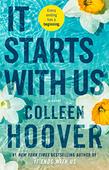
Hoover’s (November 9, 2015, etc.) latest tackles the difficult subject of domestic violence with romantic tenderness and emotional heft.
At first glance, the couple is edgy but cute: Lily Bloom runs a flower shop for people who hate flowers; Ryle Kincaid is a surgeon who says he never wants to get married or have kids. They meet on a rooftop in Boston on the night Ryle loses a patient and Lily attends her abusive father’s funeral. The provocative opening takes a dark turn when Lily receives a warning about Ryle’s intentions from his sister, who becomes Lily’s employee and close friend. Lily swears she’ll never end up in another abusive home, but when Ryle starts to show all the same warning signs that her mother ignored, Lily learns just how hard it is to say goodbye. When Ryle is not in the throes of a jealous rage, his redeeming qualities return, and Lily can justify his behavior: “I think we needed what happened on the stairwell to happen so that I would know his past and we’d be able to work on it together,” she tells herself. Lily marries Ryle hoping the good will outweigh the bad, and the mother-daughter dynamics evolve beautifully as Lily reflects on her childhood with fresh eyes. Diary entries fancifully addressed to TV host Ellen DeGeneres serve as flashbacks to Lily’s teenage years, when she met her first love, Atlas Corrigan, a homeless boy she found squatting in a neighbor’s house. When Atlas turns up in Boston, now a successful chef, he begs Lily to leave Ryle. Despite the better option right in front of her, an unexpected complication forces Lily to cut ties with Atlas, confront Ryle, and try to end the cycle of abuse before it’s too late. The relationships are portrayed with compassion and honesty, and the author’s note at the end that explains Hoover’s personal connection to the subject matter is a must-read.
Packed with riveting drama and painful truths, this book powerfully illustrates the devastation of abuse—and the strength of the survivors.Pub Date: Aug. 2, 2016
ISBN: 978-1-5011-1036-8
Page Count: 320
Publisher: Atria
Review Posted Online: May 30, 2016
Kirkus Reviews Issue: June 15, 2016

SEEN & HEARD

SEEN & HEARD

With frank language and patient plotting, this gangly teen crush grows into a confident adult love affair.
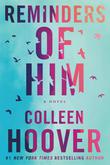
Eleven years ago, he broke her heart. But he doesn’t know why she never forgave him.
Toggling between past and present, two love stories unfold simultaneously. In the first, Macy Sorensen meets and falls in love with the boy next door, Elliot Petropoulos, in the closet of her dad’s vacation home, where they hide out to discuss their favorite books. In the second, Macy is working as a doctor and engaged to a single father, and she hasn’t spoken to Elliot since their breakup. But a chance encounter forces her to confront the truth: what happened to make Macy stop speaking to Elliot? Ultimately, they’re separated not by time or physical remoteness but by emotional distance—Elliot and Macy always kept their relationship casual because they went to different schools. And as a teen, Macy has more to worry about than which girl Elliot is taking to the prom. After losing her mother at a young age, Macy is navigating her teenage years without a female role model, relying on the time-stamped notes her mother left in her father’s care for guidance. In the present day, Macy’s father is dead as well. She throws herself into her work and rarely comes up for air, not even to plan her upcoming wedding. Since Macy is still living with her fiance while grappling with her feelings for Elliot, the flashbacks offer steamy moments, tender revelations, and sweetly awkward confessions while Macy makes peace with her past and decides her future.
With frank language and patient plotting, this gangly teen crush grows into a confident adult love affair.Pub Date: April 10, 2018
ISBN: 978-1-5011-2801-1
Page Count: 416
Publisher: Gallery Books/Simon & Schuster
Review Posted Online: Jan. 22, 2018
Kirkus Reviews Issue: Feb. 1, 2018
© Copyright 2024 Kirkus Media LLC. All Rights Reserved.
Follow
Popular in this Genre

We can’t wait for you to join Kirkus!
It’s free and takes less than 10 seconds!
Already have an account? Log in.
OR
 Sign in with Google
Trouble signing in? Retrieve credentials.
Welcome Back!
OR
Sign in with GoogleTrouble signing in? Retrieve credentials.


 bookshelf