An inconsistent but appealing novel about life and love within the strictures of a repressive regime.
An emotionally resonant coming-of-age story set during China’s Cultural Revolution.
When Li Ling receives a letter notifying him of his former lover’s death, his wife notices his distress and inquires about it; virtually the entire story is contained within his flashback narrative. He tells of being captivated by Zhang Lily from the moment he met her as a young schoolboy recently returned to Shanghai from Hong Kong. The two quickly became inseparable, eventually including Big Head, another young boy, in their childhood adventures. But their lives were turned upside down by the communist rise to power. Suddenly, Zhang Lily’s father, a professor, and Li Ling’s father, a surgeon, were stripped of professional esteem; schoolchildren were forced to labor in factories and fields; suspected dissidents were subjected to forceful re-education and public censure. Torn apart by the demands of an oppressive state, the lovers promised to hold each other in their hearts forever. Years of drudgery passed before college admissions were reinstated on a large scale, at which point the couple coincidentally found themselves enrolled at the same institution. However, the reunion, while joyful, proved to be not quite what Li Ling expected. Chen (The Mystery of Revenge, 2013 ) offers a somewhat meandering story, but the sedate pacing allows for a deeper exploration of the effects of the Cultural Revolution on individual lives. Dialogue is generally natural and authentic, though some sections are unrealistically didactic (e.g., a stilted discussion of the importance of free elections). The plotting is similarly uneven, a mix of engaging plot twists with those that lack credibility, as with an accused rapist’s initial reluctance to defend himself due to his worrying about his accuser’s potential punishment. Repeated references to the forget-me-not Lily gave Li Ling can be a bit heavy-handed, though the motif itself is endearing. Minor editing errors (e.g., “we were just prawns in the manipulative hands of the state”) are pervasive but don’t detract significantly. The flashback device is necessary for a surprise conclusion that, though only mildly surprising, is nonetheless satisfying.
An inconsistent but appealing novel about life and love within the strictures of a repressive regime.Pub Date: Oct. 22, 2013
ISBN: 978-1625108470
Page Count: 246
Publisher: Tate Publishing
Review Posted Online: Oct. 21, 2013
Review Program: Kirkus Indie

Wacky plot keeps the pages turning and enduring schmaltzy romantic sequences.
Sisters work together to solve a child-abandonment case.
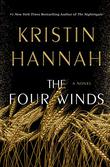
Ellie and Julia Cates have never been close. Julia is shy and brainy; Ellie gets by on charm and looks. Their differences must be tossed aside when a traumatized young girl wanders in from the forest into their hometown in Washington. The sisters’ professional skills are put to the test. Julia is a world-renowned child psychologist who has lost her edge. She is reeling from a case that went publicly sour. Though she was cleared of all wrongdoing, Julia’s name was tarnished, forcing her to shutter her Beverly Hills practice. Ellie Barton is the local police chief in Rain Valley, who’s never faced a tougher case. This is her chance to prove she is more than just a fading homecoming queen, but a scarcity of clues and a reluctant victim make locating the girl’s parents nearly impossible. Ellie places an SOS call to her sister; she needs an expert to rehabilitate this wild-child who has been living outside of civilization for years. Confronted with her professional demons, Julia once again has the opportunity to display her talents and salvage her reputation. Hannah (The Things We Do for Love, 2004, etc.) is at her best when writing from the girl’s perspective. The feral wolf-child keeps the reader interested long after the other, transparent characters have grown tiresome. Hannah’s torturously over-written romance passages are stale, but there are surprises in store as the sisters set about unearthing Alice’s past and creating a home for her.
Wacky plot keeps the pages turning and enduring schmaltzy romantic sequences.Pub Date: March 1, 2006
ISBN: 0-345-46752-3
Page Count: 400
Publisher: Ballantine
Review Posted Online: June 24, 2010
Kirkus Reviews Issue: Dec. 1, 2005

A strict report, worthy of sympathy.
A violent surfacing of adolescence (which has little in common with Tarkington's earlier, broadly comic, Seventeen) has a compulsive impact.
"Nobody big except me" is the dream world of Holden Caulfield and his first person story is down to the basic, drab English of the pre-collegiate. For Holden is now being bounced from fancy prep, and, after a vicious evening with hall- and roommates, heads for New York to try to keep his latest failure from his parents. He tries to have a wild evening (all he does is pay the check), is terrorized by the hotel elevator man and his on-call whore, has a date with a girl he likes—and hates, sees his 10 year old sister, Phoebe. He also visits a sympathetic English teacher after trying on a drunken session, and when he keeps his date with Phoebe, who turns up with her suitcase to join him on his flight, he heads home to a hospital siege. This is tender and true, and impossible, in its picture of the old hells of young boys, the lonesomeness and tentative attempts to be mature and secure, the awful block between youth and being grown-up, the fright and sickness that humans and their behavior cause the challenging, the dramatization of the big bang. It is a sorry little worm's view of the off-beat of adult pressure, of contemporary strictures and conformity, of sentiment….
A strict report, worthy of sympathy.Pub Date: June 15, 1951
ISBN: 0316769177
Page Count: -
Publisher: Little, Brown
Review Posted Online: Nov. 2, 2011
Kirkus Reviews Issue: June 15, 1951

BOOK REVIEW

SEEN & HEARD

SEEN & HEARD

APPRECIATIONS
© Copyright 2024 Kirkus Media LLC. All Rights Reserved.
Follow
Popular in this Genre

We can’t wait for you to join Kirkus!
It’s free and takes less than 10 seconds!
Already have an account? Log in.
OR
 Sign in with Google
Trouble signing in? Retrieve credentials.
Welcome Back!
OR
Sign in with GoogleTrouble signing in? Retrieve credentials.



 bookshelf