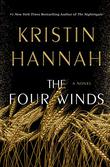
Come back, Jemima J (2000)!
Mousy woman weds philandering jerk.
A lackluster array of supposedly sophisticated characters fall in and out of love and marriage in Green’s uninspired sixth outing (a “#1-bestselling blockbuster novel in Britain,” we’re told). Alice Chambers is a shy but successful caterer who’s romanced by Joe, a good-looking womanizer: he’s oh-so-amused by her essential innocence and what passes for self-deprecating wit about terribly important things like expensive footwear that pinches (“Bloody Jimmy Choos”). Airheads on both sides of the Atlantic will be impressed by heaps and heaps of brittle oh-darling dialogue and brand-name-y prose, plus a general sense of throwaway fabulousness that would bring a chilly smile even to Anna Wintour’s narrow lips. Joe and Alice move through a slice of Manhattan that’s as thin and unreal as they are—from Bergdorf’s on 57th St. to the posh Vietnamese eatery Le Colonial a few blocks south, and that’s it, though Wall Street is mentioned once or twice. (That’s where Joe does something with money, darling.) Throwaway fabulousness, however, does not come cheap. Joe prefers New York for female-fondling escapades, but Alice flees to Connecticut and takes up gardening, finding comfort in fluffy puppies and vicarious adultery, thanks to women writers. Her carelessly elegant attire escapes the dreaded Westport effect—no navy plaid skirts and boiled-wool blazers for our Alice—as Diesel jeans and muddy Wellies get her noticed. Or is it actually her trim tummy and newfound self-confidence? And what about Joe, who’s worried about getting his bunny boiled by an out-of-control mistress? Oh, darling, it’s all so ironic. And all written in the present tense, too . . . .
Come back, Jemima J (2000)!Pub Date: May 18, 2004
ISBN: 0-7679-1226-8
Page Count: 432
Publisher: Broadway
Review Posted Online: June 24, 2010
Kirkus Reviews Issue: April 1, 2004

Wacky plot keeps the pages turning and enduring schmaltzy romantic sequences.
Sisters work together to solve a child-abandonment case.
Ellie and Julia Cates have never been close. Julia is shy and brainy; Ellie gets by on charm and looks. Their differences must be tossed aside when a traumatized young girl wanders in from the forest into their hometown in Washington. The sisters’ professional skills are put to the test. Julia is a world-renowned child psychologist who has lost her edge. She is reeling from a case that went publicly sour. Though she was cleared of all wrongdoing, Julia’s name was tarnished, forcing her to shutter her Beverly Hills practice. Ellie Barton is the local police chief in Rain Valley, who’s never faced a tougher case. This is her chance to prove she is more than just a fading homecoming queen, but a scarcity of clues and a reluctant victim make locating the girl’s parents nearly impossible. Ellie places an SOS call to her sister; she needs an expert to rehabilitate this wild-child who has been living outside of civilization for years. Confronted with her professional demons, Julia once again has the opportunity to display her talents and salvage her reputation. Hannah (The Things We Do for Love, 2004, etc.) is at her best when writing from the girl’s perspective. The feral wolf-child keeps the reader interested long after the other, transparent characters have grown tiresome. Hannah’s torturously over-written romance passages are stale, but there are surprises in store as the sisters set about unearthing Alice’s past and creating a home for her.
Wacky plot keeps the pages turning and enduring schmaltzy romantic sequences.Pub Date: March 1, 2006
ISBN: 0-345-46752-3
Page Count: 400
Publisher: Ballantine
Review Posted Online: June 24, 2010
Kirkus Reviews Issue: Dec. 1, 2005

A strict report, worthy of sympathy.
A violent surfacing of adolescence (which has little in common with Tarkington's earlier, broadly comic, Seventeen) has a compulsive impact.
"Nobody big except me" is the dream world of Holden Caulfield and his first person story is down to the basic, drab English of the pre-collegiate. For Holden is now being bounced from fancy prep, and, after a vicious evening with hall- and roommates, heads for New York to try to keep his latest failure from his parents. He tries to have a wild evening (all he does is pay the check), is terrorized by the hotel elevator man and his on-call whore, has a date with a girl he likes—and hates, sees his 10 year old sister, Phoebe. He also visits a sympathetic English teacher after trying on a drunken session, and when he keeps his date with Phoebe, who turns up with her suitcase to join him on his flight, he heads home to a hospital siege. This is tender and true, and impossible, in its picture of the old hells of young boys, the lonesomeness and tentative attempts to be mature and secure, the awful block between youth and being grown-up, the fright and sickness that humans and their behavior cause the challenging, the dramatization of the big bang. It is a sorry little worm's view of the off-beat of adult pressure, of contemporary strictures and conformity, of sentiment….
A strict report, worthy of sympathy.Pub Date: June 15, 1951
ISBN: 0316769177
Page Count: -
Publisher: Little, Brown
Review Posted Online: Nov. 2, 2011
Kirkus Reviews Issue: June 15, 1951

BOOK REVIEW

SEEN & HEARD

SEEN & HEARD

APPRECIATIONS
© Copyright 2024 Kirkus Media LLC. All Rights Reserved.
Follow
Popular in this Genre

We can’t wait for you to join Kirkus!
It’s free and takes less than 10 seconds!
Already have an account? Log in.
OR
 Sign in with Google
Trouble signing in? Retrieve credentials.
Welcome Back!
OR
Sign in with GoogleTrouble signing in? Retrieve credentials.



 bookshelf