


A careful, well-informed examination of where the U.S. economy stands, how it got here, and where it needs to go.
An incisive study of how “the paradigm of globalization is now shifting.”
Globalization may have provided cheap consumer goods, notes Financial Times associate editor Foroohar, but there is an increasing awareness of the long-term costs. In her latest book, the author marshals an impressive range of knowledge to investigate the negative consequences of unquestioned globalization. The Covid-19 pandemic was a wake-up call to U.S. officials, revealing that the manufacture of even simple things such as cotton masks had been outsourced abroad, mainly to China. Fortunately, many American companies were able to structure their manufacturing processes to provide some of the needed goods. As Foroohar demonstrates, this revealed both the weaknesses and strengths of the U.S. economy. She accepts that globalization made many things cheaper for consumers, but she is realistic about the cost in the loss of jobs and resilience. At the same time, many companies have been cutting research-and-development spending and putting money into complex financial products—yet another example of short-sighted thinking. Much of the money and energy to support innovation has gone into the technology sector, and the result has been a “barbell economy” of big tech wealth and a “precariat” of low-paid service workers. However, Foroohar, who traveled the country as part of her research, sees an emerging generation of companies that have returned to making things in top-of-the-line factories that are making full use of 3-D printing and clever thinking. The author also sees a key role for government—not in splashing money around but in setting sensible trade rules and long-term objectives. Examining the industrial policies of other nations, Foroohar shares useful lessons. Ultimately, the pendulum has swung away from cut-price globalization toward more considered, localized perspectives. These are interesting, important views and ideas; hopefully, this book forms the basis of a new, cool-headed national discussion.
A careful, well-informed examination of where the U.S. economy stands, how it got here, and where it needs to go.Pub Date: Oct. 18, 2022
ISBN: 978-0-593-24053-3
Page Count: 400
Publisher: Crown
Review Posted Online: Aug. 29, 2022
Kirkus Reviews Issue: Sept. 1, 2022

A fierce, penetrating, and empowering call for change.
Artist and activist Vaid-Menon demonstrates how the normativity of the gender binary represses creativity and inflicts physical and emotional violence.
The author, whose parents emigrated from India, writes about how enforcement of the gender binary begins before birth and affects people in all stages of life, with people of color being especially vulnerable due to Western conceptions of gender as binary. Gender assignments create a narrative for how a person should behave, what they are allowed to like or wear, and how they express themself. Punishment of nonconformity leads to an inseparable link between gender and shame. Vaid-Menon challenges familiar arguments against gender nonconformity, breaking them down into four categories—dismissal, inconvenience, biology, and the slippery slope (fear of the consequences of acceptance). Headers in bold font create an accessible navigation experience from one analysis to the next. The prose maintains a conversational tone that feels as intimate and vulnerable as talking with a best friend. At the same time, the author's turns of phrase in moments of deep insight ring with precision and poetry. In one reflection, they write, “the most lethal part of the human body is not the fist; it is the eye. What people see and how people see it has everything to do with power.” While this short essay speaks honestly of pain and injustice, it concludes with encouragement and an invitation into a future that celebrates transformation.
A fierce, penetrating, and empowering call for change. (writing prompt) (Nonfiction. 14-adult)Pub Date: June 2, 2020
ISBN: 978-0-593-09465-5
Page Count: 64
Publisher: Penguin Workshop
Review Posted Online: March 14, 2020
Kirkus Reviews Issue: April 1, 2020

A clearly delineated guide to finally eradicate poverty in America.
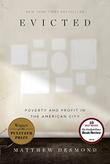
A thoughtful program for eradicating poverty from the Pulitzer Prize–winning author of Evicted.
“America’s poverty is not for lack of resources,” writes Desmond. “We lack something else.” That something else is compassion, in part, but it’s also the lack of a social system that insists that everyone pull their weight—and that includes the corporations and wealthy individuals who, the IRS estimates, get away without paying upward of $1 trillion per year. Desmond, who grew up in modest circumstances and suffered poverty in young adulthood, points to the deleterious effects of being poor—among countless others, the precarity of health care and housing (with no meaningful controls on rent), lack of transportation, the constant threat of losing one’s job due to illness, and the need to care for dependent children. It does not help, Desmond adds, that so few working people are represented by unions or that Black Americans, even those who have followed the “three rules” (graduate from high school, get a full-time job, wait until marriage to have children), are far likelier to be poor than their White compatriots. Furthermore, so many full-time jobs are being recast as contracted, fire-at-will gigs, “not a break from the norm as much as an extension of it, a continuation of corporations finding new ways to limit their obligations to workers.” By Desmond’s reckoning, besides amending these conditions, it would not take a miracle to eliminate poverty: about $177 billion, which would help end hunger and homelessness and “make immense headway in driving down the many agonizing correlates of poverty, like violence, sickness, and despair.” These are matters requiring systemic reform, which will in turn require Americans to elect officials who will enact that reform. And all of us, the author urges, must become “poverty abolitionists…refusing to live as unwitting enemies of the poor.” Fortune 500 CEOs won’t like Desmond’s message for rewriting the social contract—which is precisely the point.
A clearly delineated guide to finally eradicate poverty in America.Pub Date: March 21, 2023
ISBN: 9780593239919
Page Count: 288
Publisher: Crown
Review Posted Online: Nov. 30, 2022
Kirkus Reviews Issue: Jan. 1, 2023
BOOK REVIEW

PERSPECTIVES

PERSPECTIVES

SEEN & HEARD
© Copyright 2024 Kirkus Media LLC. All Rights Reserved.
Follow
Popular in this Genre

We can’t wait for you to join Kirkus!
It’s free and takes less than 10 seconds!
Already have an account? Log in.
OR
 Sign in with Google
Trouble signing in? Retrieve credentials.
Welcome Back!
OR
Sign in with GoogleTrouble signing in? Retrieve credentials.



 bookshelf


