


A free-wheeling Jewish comic novel before its time, this artfully contained commentary on Jewish life in Europe in the early...
First published in 1920 and set 17 years earlier, Gronemann's newly translated novel blends satiric humor and an eerie sense of foreboding in relating the efforts of European Jews to assimilate at a wildly contentious and confusing time.
Drawing on his own experiences, Gronemann focuses on two very different characters heading down two very different paths. Heinz Lehnsen is a well-trod regional court director in Berlin who changed his last name from Levysohn after having himself and his family converted to Christianity. Yossel Schlenker, Heinz's distant cousin, is a Talmudic scholar from the Russian shtetl of Borytshev who finds a world of new possibilities in bustling Berlin after immigrating there with his new, free-willed wife, Chana Weinstein. After an encounter with Yossel in Berlin, the conflicted Heinz, who “had never had anything Jewish around him," has his interest awakened in his disavowed roots. He travels to Borytshev, where, his Christian "cover" blown, he gets swept up by, but survives, an anti-Jewish pogrom. Written at a time when the new Weimar state was promising at least a whiff of democracy, the book holds out a certain promise for European Jews. With slippery, larger-than-life characters like Chana's con man father, whose schemes include writing "schnorrer letters" to solicit money from poor people who think they're contributing to a cause, Gronemann suggests there will be no keeping his people down. But with each cruel and offhanded denunciation of Jews and their Zionist dreams, and each cold reference to their past trials—"How was it even possible that there were even still Jews!" ponders Heinz—the book augurs unspeakably dark times ahead.
A free-wheeling Jewish comic novel before its time, this artfully contained commentary on Jewish life in Europe in the early 1900s makes a welcome reappearance.Pub Date: April 1, 2016
ISBN: 978-0-253-01957-8
Page Count: 320
Publisher: Indiana Univ.
Review Posted Online: March 15, 2016
Kirkus Reviews Issue: April 1, 2016
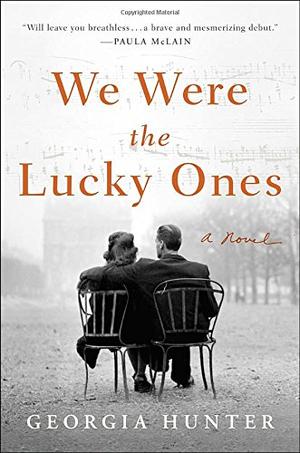
Too beholden to sentimentality and cliché, this novel fails to establish a uniquely realized perspective.
Hunter’s debut novel tracks the experiences of her family members during the Holocaust.
Sol and Nechuma Kurc, wealthy, cultured Jews in Radom, Poland, are successful shop owners; they and their grown children live a comfortable lifestyle. But that lifestyle is no protection against the onslaught of the Holocaust, which eventually scatters the members of the Kurc family among several continents. Genek, the oldest son, is exiled with his wife to a Siberian gulag. Halina, youngest of all the children, works to protect her family alongside her resistance-fighter husband. Addy, middle child, a composer and engineer before the war breaks out, leaves Europe on one of the last passenger ships, ending up thousands of miles away. Then, too, there are Mila and Felicia, Jakob and Bella, each with their own share of struggles—pain endured, horrors witnessed. Hunter conducted extensive research after learning that her grandfather (Addy in the book) survived the Holocaust. The research shows: her novel is thorough and precise in its details. It’s less precise in its language, however, which frequently relies on cliché. “You’ll get only one shot at this,” Halina thinks, enacting a plan to save her husband. “Don’t botch it.” Later, Genek, confronting a routine bit of paperwork, must decide whether or not to hide his Jewishness. “That form is a deal breaker,” he tells himself. “It’s life and death.” And: “They are low, it seems, on good fortune. And something tells him they’ll need it.” Worse than these stale phrases, though, are the moments when Hunter’s writing is entirely inadequate for the subject matter at hand. Genek, describing the gulag, calls the nearest town “a total shitscape.” This is a low point for Hunter’s writing; elsewhere in the novel, it’s stronger. Still, the characters remain flat and unknowable, while the novel itself is predictable. At this point, more than half a century’s worth of fiction and film has been inspired by the Holocaust—a weighty and imposing tradition. Hunter, it seems, hasn’t been able to break free from her dependence on it.
Too beholden to sentimentality and cliché, this novel fails to establish a uniquely realized perspective.Pub Date: Feb. 14, 2017
ISBN: 978-0-399-56308-9
Page Count: 416
Publisher: Viking
Review Posted Online: Nov. 21, 2016
Kirkus Reviews Issue: Dec. 1, 2016

BOOK TO SCREEN

The writing is merely serviceable, and one can’t help but wish the author had found a way to present her material as...
An unlikely love story set amid the horrors of a Nazi death camp.
Based on real people and events, this debut novel follows Lale Sokolov, a young Slovakian Jew sent to Auschwitz in 1942. There, he assumes the heinous task of tattooing incoming Jewish prisoners with the dehumanizing numbers their SS captors use to identify them. When the Tätowierer, as he is called, meets fellow prisoner Gita Furman, 17, he is immediately smitten. Eventually, the attraction becomes mutual. Lale proves himself an operator, at once cagey and courageous: As the Tätowierer, he is granted special privileges and manages to smuggle food to starving prisoners. Through female prisoners who catalog the belongings confiscated from fellow inmates, Lale gains access to jewels, which he trades to a pair of local villagers for chocolate, medicine, and other items. Meanwhile, despite overwhelming odds, Lale and Gita are able to meet privately from time to time and become lovers. In 1944, just ahead of the arrival of Russian troops, Lale and Gita separately leave the concentration camp and experience harrowingly close calls. Suffice it to say they both survive. To her credit, the author doesn’t flinch from describing the depravity of the SS in Auschwitz and the unimaginable suffering of their victims—no gauzy evasions here, as in Boy in the Striped Pajamas. She also manages to raise, if not really explore, some trickier issues—the guilt of those Jews, like the tattooist, who survived by doing the Nazis’ bidding, in a sense betraying their fellow Jews; and the complicity of those non-Jews, like the Slovaks in Lale’s hometown, who failed to come to the aid of their beleaguered countrymen.
The writing is merely serviceable, and one can’t help but wish the author had found a way to present her material as nonfiction. Still, this is a powerful, gut-wrenching tale that is hard to shake off.Pub Date: Sept. 4, 2018
ISBN: 978-0-06-279715-5
Page Count: 272
Publisher: Harper/HarperCollins
Review Posted Online: July 16, 2018
Kirkus Reviews Issue: Aug. 1, 2018

BOOK REVIEW

BOOK REVIEW
© Copyright 2024 Kirkus Media LLC. All Rights Reserved.
Follow
Popular in this Genre

We can’t wait for you to join Kirkus!
It’s free and takes less than 10 seconds!
Already have an account? Log in.
OR
 Sign in with Google
Trouble signing in? Retrieve credentials.
Welcome Back!
OR
Sign in with GoogleTrouble signing in? Retrieve credentials.



 bookshelf

