This sprawling historical novel has an explosive concept at its heart: the discovery of an ancient, alternative Quran.
Balderston’s (The Proven God, 2011) latest book begins in fairly familiar Da Vinci Code territory: Bobby Johnson and Grace Richards are working on the renovation of an old church named Trinity when they discover a crypt and hints of an ancient library on the premises. They learn that the building is owned by a shadowy organization called the Alpha and Omega Society for the Preservation of Truth. For decades, the society has boarded up the library rather than allow its books to incite the world’s anger and rejection—particularly The Wonder of Terra by Father John “Poggio” Dolan, who’d been a part of the society for years but has since retired to Colorado. In order to understand The Wonder, Bobby, Grace and the head of the society jet off to see Dolan, who has a bombshell for them all: Years before, he bought an old manuscript he thought was an ancient Quran, until Ali Malek, a Lebanese friend of his, studied the manuscript and was astonished to discover that it wasn’t a Quran. Rather, it was some kind of alternate Islamic text every bit as old as the Muslim holy book but radically different in several key ways that, if verified and published, would be revolutionary. They anticipate the outrage of the ulema, the scholars of Islam, who’ll cite the relevant passages from the Quran utterly forbidding additions and alterations, let alone wholesale revisions. This alternate Quran could provoke “a battle for control of the Muslim world.” Balderston varies these present-day theological tensions with extensive, well-realized historical segments dramatizing the book’s long history. However, the vibrancy of this history might lead conservative sects to a simple solution: “It was a book that needed to be destroyed.” Balderston skillfully balances these separate strands, blending the past and the present in a potent mixture that will please all but the most religiously zealous readers.
A textured, intriguing novel about a world-changing holy book.
Pub Date: Nov. 18, 2014
ISBN: N/A
Page Count: -
Publisher: Tate Publishing
Review Posted Online: Sept. 26, 2014
Review Program: Kirkus Indie

A tasty, if not always tasteful, tale of supernatural mayhem that fans of King and Crichton alike will enjoy.
Are we not men? We are—well, ask Bigfoot, as Brooks does in this delightful yarn, following on his bestseller World War Z(2006).
A zombie apocalypse is one thing. A volcanic eruption is quite another, for, as the journalist who does a framing voice-over narration for Brooks’ latest puts it, when Mount Rainier popped its cork, “it was the psychological aspect, the hyperbole-fueled hysteria that had ended up killing the most people.” Maybe, but the sasquatches whom the volcano displaced contributed to the statistics, too, if only out of self-defense. Brooks places the epicenter of the Bigfoot war in a high-tech hideaway populated by the kind of people you might find in a Jurassic Park franchise: the schmo who doesn’t know how to do much of anything but tries anyway, the well-intentioned bleeding heart, the know-it-all intellectual who turns out to know the wrong things, the immigrant with a tough backstory and an instinct for survival. Indeed, the novel does double duty as a survival manual, packed full of good advice—for instance, try not to get wounded, for “injury turns you from a giver to a taker. Taking up our resources, our time to care for you.” Brooks presents a case for making room for Bigfoot in the world while peppering his narrative with timely social criticism about bad behavior on the human side of the conflict: The explosion of Rainier might have been better forecast had the president not slashed the budget of the U.S. Geological Survey, leading to “immediate suspension of the National Volcano Early Warning System,” and there’s always someone around looking to monetize the natural disaster and the sasquatch-y onslaught that follows. Brooks is a pro at building suspense even if it plays out in some rather spectacularly yucky episodes, one involving a short spear that takes its name from “the sucking sound of pulling it out of the dead man’s heart and lungs.” Grossness aside, it puts you right there on the scene.
A tasty, if not always tasteful, tale of supernatural mayhem that fans of King and Crichton alike will enjoy.Pub Date: June 16, 2020
ISBN: 978-1-9848-2678-7
Page Count: 304
Publisher: Del Rey/Ballantine
Review Posted Online: Feb. 9, 2020
Kirkus Reviews Issue: March 1, 2020

BOOK REVIEW

BOOK TO SCREEN

Packed with riveting drama and painful truths, this book powerfully illustrates the devastation of abuse—and the strength of...
Hoover’s (November 9, 2015, etc.) latest tackles the difficult subject of domestic violence with romantic tenderness and emotional heft.
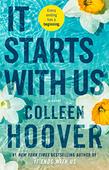
At first glance, the couple is edgy but cute: Lily Bloom runs a flower shop for people who hate flowers; Ryle Kincaid is a surgeon who says he never wants to get married or have kids. They meet on a rooftop in Boston on the night Ryle loses a patient and Lily attends her abusive father’s funeral. The provocative opening takes a dark turn when Lily receives a warning about Ryle’s intentions from his sister, who becomes Lily’s employee and close friend. Lily swears she’ll never end up in another abusive home, but when Ryle starts to show all the same warning signs that her mother ignored, Lily learns just how hard it is to say goodbye. When Ryle is not in the throes of a jealous rage, his redeeming qualities return, and Lily can justify his behavior: “I think we needed what happened on the stairwell to happen so that I would know his past and we’d be able to work on it together,” she tells herself. Lily marries Ryle hoping the good will outweigh the bad, and the mother-daughter dynamics evolve beautifully as Lily reflects on her childhood with fresh eyes. Diary entries fancifully addressed to TV host Ellen DeGeneres serve as flashbacks to Lily’s teenage years, when she met her first love, Atlas Corrigan, a homeless boy she found squatting in a neighbor’s house. When Atlas turns up in Boston, now a successful chef, he begs Lily to leave Ryle. Despite the better option right in front of her, an unexpected complication forces Lily to cut ties with Atlas, confront Ryle, and try to end the cycle of abuse before it’s too late. The relationships are portrayed with compassion and honesty, and the author’s note at the end that explains Hoover’s personal connection to the subject matter is a must-read.
Packed with riveting drama and painful truths, this book powerfully illustrates the devastation of abuse—and the strength of the survivors.Pub Date: Aug. 2, 2016
ISBN: 978-1-5011-1036-8
Page Count: 320
Publisher: Atria
Review Posted Online: May 30, 2016
Kirkus Reviews Issue: June 15, 2016

SEEN & HEARD

SEEN & HEARD
© Copyright 2024 Kirkus Media LLC. All Rights Reserved.
Follow
Popular in this Genre

We can’t wait for you to join Kirkus!
It’s free and takes less than 10 seconds!
Already have an account? Log in.
OR
 Sign in with Google
Trouble signing in? Retrieve credentials.
Welcome Back!
OR
Sign in with GoogleTrouble signing in? Retrieve credentials.



 bookshelf