An enthralling dystopian drama that makes complex points about parenting with depth and feeling.
Current ideas about parenting are held up to scrutiny in a dark satire that's also a dramatic women-in-prison story.
"There are seventeen women tonight, including Frida. In one lit corner, they sit on cold metal folding chairs, arranged in a circle....They could be stars of a slasher film or the world's saddest hip-hop video." But in fact, they are mothers who have been separated from their children and incarcerated for one year at a former college campus outside Philadelphia. Recalling The Handmaids' Tale, Orange Is the New Black, and Clockwork Orange, Chan's debut features Frida, a 39-year-old Chinese American mom with a part-time job in academia and an 18-month-old named Harriet. Left for a younger woman by her husband, Gust, soon after their daughter was born, Frida is struggling with exhaustion and loneliness when she has her "very bad day"—she leaves Harriet alone in the house while she goes out to get coffee and pick up papers at work. Harriet is taken into custody, then sent to live with Gust and his girlfriend while Frida is surveilled in her home and on supervised visits to determine her fitness to parent. When she fails, she is remanded to reform school with other mothers who have looked away at the wrong time, who have given in to anger or selfishness, who must now repent and relearn. "I am a narcissist. I am a danger to my child," they are trained to recite, along with "I am a bad mother, but I am learning to be good." They are paired with lifelike robot dolls on whom they practice "Fundamentals of Care and Nurture" and study "Dangers Inside and Outside the Home." They are taught to speak "motherese" and to disregard their own needs and desires; they are tested, monitored, scanned, and evaluated. Friendships and romances bloom; desperation spreads; trouble brews. If this doesn't become a miniseries, nothing will.
An enthralling dystopian drama that makes complex points about parenting with depth and feeling.Pub Date: Jan. 4, 2022
ISBN: 978-1-982156-12-1
Page Count: 336
Publisher: Simon & Schuster
Review Posted Online: Oct. 26, 2021
Kirkus Reviews Issue: Nov. 15, 2021

PERSPECTIVES

BOOK TO SCREEN

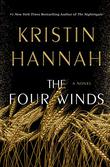
A dramatic, vividly detailed reconstruction of a little-known aspect of the Vietnam War.
A young woman’s experience as a nurse in Vietnam casts a deep shadow over her life.
When we learn that the farewell party in the opening scene is for Frances “Frankie” McGrath’s older brother—“a golden boy, a wild child who could make the hardest heart soften”—who is leaving to serve in Vietnam in 1966, we feel pretty certain that poor Finley McGrath is marked for death. Still, it’s a surprise when the fateful doorbell rings less than 20 pages later. His death inspires his sister to enlist as an Army nurse, and this turn of events is just the beginning of a roller coaster of a plot that’s impressive and engrossing if at times a bit formulaic. Hannah renders the experiences of the young women who served in Vietnam in all-encompassing detail. The first half of the book, set in gore-drenched hospital wards, mildewed dorm rooms, and boozy officers’ clubs, is an exciting read, tracking the transformation of virginal, uptight Frankie into a crack surgical nurse and woman of the world. Her tensely platonic romance with a married surgeon ends when his broken, unbreathing body is airlifted out by helicopter; she throws her pent-up passion into a wild affair with a soldier who happens to be her dead brother’s best friend. In the second part of the book, after the war, Frankie seems to experience every possible bad break. A drawback of the story is that none of the secondary characters in her life are fully three-dimensional: Her dismissive, chauvinistic father and tight-lipped, pill-popping mother, her fellow nurses, and her various love interests are more plot devices than people. You’ll wish you could have gone to Vegas and placed a bet on the ending—while it’s against all the odds, you’ll see it coming from a mile away.
A dramatic, vividly detailed reconstruction of a little-known aspect of the Vietnam War.Pub Date: Feb. 6, 2024
ISBN: 9781250178633
Page Count: 480
Publisher: St. Martin's
Review Posted Online: Nov. 4, 2023
Kirkus Reviews Issue: Dec. 1, 2023

PERSPECTIVES

BOOK TO SCREEN

One of the noblest characters in American literature gets a novel worthy of him.
Mark Twain's Adventures of Huckleberry Finn as told from the perspective of a more resourceful and contemplative Jim than the one you remember.
This isn’t the first novel to reimagine Twain’s 1885 masterpiece, but the audacious and prolific Everett dives into the very heart of Twain’s epochal odyssey, shifting the central viewpoint from that of the unschooled, often credulous, but basically good-hearted Huck to the more enigmatic and heroic Jim, the Black slave with whom the boy escapes via raft on the Mississippi River. As in the original, the threat of Jim’s being sold “down the river” and separated from his wife and daughter compels him to run away while figuring out what to do next. He's soon joined by Huck, who has faked his own death to get away from an abusive father, ramping up Jim’s panic. “Huck was supposedly murdered and I’d just run away,” Jim thinks. “Who did I think they would suspect of the heinous crime?” That Jim can, as he puts it, “[do] the math” on his predicament suggests how different Everett’s version is from Twain’s. First and foremost, there's the matter of the Black dialect Twain used to depict the speech of Jim and other Black characters—which, for many contemporary readers, hinders their enjoyment of his novel. In Everett’s telling, the dialect is a put-on, a manner of concealment, and a tactic for survival. “White folks expect us to sound a certain way and it can only help if we don’t disappoint them,” Jim explains. He also discloses that, in violation of custom and law, he learned to read the books in Judge Thatcher’s library, including Voltaire and John Locke, both of whom, in dreams and delirium, Jim finds himself debating about human rights and his own humanity. With and without Huck, Jim undergoes dangerous tribulations and hairbreadth escapes in an antebellum wilderness that’s much grimmer and bloodier than Twain’s. There’s also a revelation toward the end that, however stunning to devoted readers of the original, makes perfect sense.
One of the noblest characters in American literature gets a novel worthy of him.Pub Date: March 19, 2024
ISBN: 9780385550369
Page Count: 320
Publisher: Doubleday
Review Posted Online: Dec. 16, 2023
Kirkus Reviews Issue: Jan. 15, 2024

PERSPECTIVES

PERSPECTIVES
© Copyright 2024 Kirkus Media LLC. All Rights Reserved.
Follow
Popular in this Genre

We can’t wait for you to join Kirkus!
It’s free and takes less than 10 seconds!
Already have an account? Log in.
OR
 Sign in with Google
Trouble signing in? Retrieve credentials.
Welcome Back!
OR
Sign in with GoogleTrouble signing in? Retrieve credentials.



 bookshelf